百蹊助学社区

 找回密码
 加入百蹊

QQ登录

只需一步,快速开始

搜索
开启左侧

Food for thought

[复制链接]
 楼主| 易枫 发表于 2009-6-23 12:02 | 显示全部楼层
31# 丝蓝
我在山西,不在西安。你在西安吗?
巴西木 发表于 2009-6-23 16:18 | 显示全部楼层
刚知道绍兴黄酒有分善酿,元红,还有两个名又忘了.呃。。。。。。。
 楼主| 易枫 发表于 2009-7-2 00:46 | 显示全部楼层
本帖最后由 易枫 于 2009-7-2 00:47 编辑

Evolution

Balls and brains Dec 4th 2008

From The Economist print edition

备注:标题就不翻了.

brains :智力,智能.

Balls,俚语,意思是男性的睾丸.


The quality of a man’s sperm depends on how intelligent he is, and vice versa 成年男性的精液质量取决于其智力,反之亦然
THERE are few better ways of upsetting a certain sort of politically correct person than to suggest that intelligence (or, rather, the variation in intelligence between individuals) is under genetic control. That, however, is one implication of a paper about to be published in Intelligence by Rosalind Arden of King’s College, London, and her colleagues. Another is that brainy people are intrinsically healthier than those less intellectually endowed. And the third, a consequence of the second, is that intelligence is sexy. The most surprising thing of all, though, is that these results have emerged from an unrelated study of the quality of men’s sperm.

除了指出智力(或准确的是说个体之间智力的差异)是由基因控制的以外,还能让某一类表现的总是理性的人感到烦恼的方法就相当的少了。这是伦敦大学国王学院的Rosalind Arden和她的同事即将在Intelligence发表的文章里的暗示之一此外,从本质上而言,聪明的男子要比智力程度低的人更为健康。第三,从第二点引出的结论就是,智力就是性感。然而,所有这些中,最引人侧目的还在于这个结论是在一个与此毫无关联的男子精液质量的研究过程中浮现出来的。

Ms Arden is one of a group of researchers looking into the connections between intelligence, genetics and health. General intelligence (the extent to which specific, measurable aspects of intelligence, such as linguistic facility, mathematical aptitude and spatial awareness, are correlated in a given individual) is measured by psychologists using a value called Spearman’s g. Recently, it has been discovered that an individual’s g value is correlated with many aspects of his health, up to and including his lifespan. One possible explanation for this is that intelligent people make better choices about how to conduct their lives. They may, for example, be less likely to smoke, more likely to eat healthy foods or to exercise, and so on.

Ms Arden是旨在寻求智力,遗传和健康之间关系的研究小组的成员之一。一般智力(对一个指定的个体来说,所谓的可度量的智力特性,比如语言能力,数学能力以及空间感知等方面之间有着相互关系)被心理学家使用Spearman’s g值来量化。近来的研究发现个体的g值和其自身的健康状况甚至和其寿命有着某种关联。可能性比较大的解释是聪明人会选择更为健康的生活方式。比如,他们会更加倾向于少吸烟,更多的食用健康食品以及更多的健身活动等等。

Alternatively (or in addition) it may be that intelligence is one manifestation of an underlying, genetically based healthiness. That is a view held by many evolutionary biologists, and was propounded in its modern form by Geoffrey Miller of the University of New Mexico, who is one of Ms Arden’s co-authors (and, as it happens, her husband). These biologists believe intelligence, as manifested in things like artistic and musical ability, is such a reliable indicator of underlying genetic fitness that it has been chosen by members of the opposite sex over the millennia. In the ensuing arms race to show off and get a mate it has been exaggerated in the way that a peacock’s tail is. This process of sexual selection, Dr Miller and his followers believe, is the reason people have become so brainy.

换而言之(或者说),智力是基于内在的健康基因的一种表现形式。很多进化论生物学家持有这种由Ms Arden的论文合作者(也是她的丈夫)新墨西哥大学的Geoffrey Miller提出的观点。这些生物学家坚信,智力就象艺术和音乐能力一样是一种可信的内在的遗传适合度的外在表现。这种遗传适合度在数千年的进化中被异性所选择,结果之一比如雄孔雀炫耀其尾以获得异性青睐。Dr Mille和他的支持者们相信,这种异性选择是人们变的如此聪明的原因。
Hitting the g spot(直译为命中g点,事实上是f这个概念的提出,使得g这个概念更加丰富) Ms Arden sought to test this idea in a way that excluded intelligent choice and got directly at any correlations between intelligence and health that operate at the physiological level. She chose sperm quality because it is both easily measured and about as far from intelligent choice as it is possible to imagine—and because the relevant data had already been collected.

Ms Arden使用了一种方法来检验这个观点。这种方法排除了(所谓的)智能选择,以直接在生理学意义上寻求智力和健康之间的任何关系。她选择精液质量,之所以如此,是因为精液质量易于测定,而且还和智能选择无关,并且相关的数据已经早已被人收集。


Her retrospective “volunteers” were former American soldiers enrolled in what was known as the Vietnam Experience Study. In 1985 almost 4,500 veterans of that war volunteered for extensive medical and mental examinations. Some of them gave semen samples that were analysed for sperm concentration (ie, number of sperm per cubic centimetre), sperm count (ie, total number of sperm in the ejaculate) and sperm motility.

这些志愿者的相关信息来源于越战经历者的一项研究中登记的前美军士兵。在1985年将近4500名参加过那场战争饿退伍军人志愿参与了广泛的药物和心理测试。他们中的部分人员给出了精液样本,这些样本的分析数据包括精液浓度(也就是说,每立方厘米精液的精子数量),精子数目(单次射精的镜子数量)以及精子的活动度。

Ms Arden found 425 cases where samples had been collected and analysed from unvasectomised men who had managed to avoid spilling their seed during the collection process and had answered all the necessary questions for her to test her hypothesis, namely that their g values would correlate with all three measures of their sperm quality.

Ms Arden425个案例中发现,那些在样本收集过程中小心的处理以避免精液溅出的没有做过输精管切除术的男人们已经很好的回答了所有必需的问题以验证她的设想,也就是说他们的g值和衡量他们精液质量的三个指标之间相互关联。


They did. Moreover, neither age nor any obvious confounding variable that might have been a consequence of intelligent decisions about health (obesity, smoking, drinking and drug use) had any effect on the result. Brainy men, it seems, do have better sperm.

他们证实这个设想是成立的。此外,无论是年龄还是其他任何容易混淆的对健康有着决定性影响的智力因数(如肥胖,吸烟,饮酒以及药物)都对这个结果没有任何影响。这似乎表明,聪明的男子,其精子也一定优秀.

By implication, therefore, they have fitter bodies over all, at least in the Darwinian sense of fitness, namely the ability to survive, to attract mates and to produce offspring. That is an important finding. Hitherto, biologists have tended to disaggregate the idea of fitness into a series of adaptations that are more or less independent of each other. This work adds to the idea of a general fitness factor, f, that is similar in concept to g—and of which g is one manifestation. To him that hath, in other words, shall be given. Unfortunately for the politically correct, Dr Miller’s hypothesis looks stronger by the day.

这也意味着,至少在达尔文进化论学说的层面上,他们有着更具适应性的身体。也就是说,他们有着生存能力,吸引异性的能力以及生儿育女的能力。这是一项重大的发现。迄今为止,生物学家致力于将适应度分解为一系列互相依赖或者互不关联的适应性项目,而Ms Arden的发现为此添加了一个普遍的参数f,这个参数的概念和g类似,并且是g的一种证明方式。换而言之,这应该是一种天赐。对那些一贯理性的人来说,很不幸,然而随着时间的推移,Dr Miller的假说越来越有说服力。


原文:


http://www.economist.com/science/displaystory.cfm?story_id=12719355


to him that hath, in other words, shall be given. 出自圣经,大概意义是,他已经有的,要给他更好的。


 楼主| 易枫 发表于 2009-7-28 23:07 | 显示全部楼层

Extending lifespan Of mice and monkeys

Jul 9th 2009
From The Economist print edition

How to extend your life by a decade or two
MOST people accept that death and taxes are inevitable. But that doesn’t mean you should not try to postpone them. A good accountant can help with the latter, but the usual prescription for the former is a way of life that avoids excess.
That advice might be even truer than many of its proponents realise, for it has long been known that restricting the diets of several species of laboratory animal seems to slow down the process of ageing. This is a question not just of avoiding obesity, but of reducing an individual’s intake of calories to a point significantly below normal consumption—almost, but not quite, to the point of malnutrition. At the same time, some drugs are also known to have anti-ageing properties—again, in “lower” animals. It is therefore good news for potential Methuselahs that both these approaches have now been brought closer, phylogenetically speaking, to humanity.
Caloric restriction, as the dietary method is properly known, was tested by Richard Weindruch and his team at the University of Wisconsin using rhesus monkeys—the workhorses (to mix literal and metaphorical livestock) of laboratory studies on non-human primates. Previously, the nearest species to a human for which caloric restriction had been proved to work was a mouse. Dr Weindruch’s results are published in this week’s edition of Science.
Meanwhile that publication’s rival, Nature, has a report by David Harrison of the Jackson Laboratory in Maine and his colleagues on the life-prolonging effects of a drug called rapamycin. In this case the experiment was done on mice. But that is much closer to humans than the nematode worms and fruit flies which were the subjects of previous successful experiments on drug-induced life extension.
No pain, no gain
One reason why primates have not been the subject of anti-ageing studies until now is that they live so long anyway. Dr Weindruch’s paper is the result of 20 years of work. Over the course of that period he and his team have looked at 76 monkeys (30 males to start with and, since 1994, another 16 males and 30 females). Half these animals were kept as controls, with no changes in their diet, and the other half experimented upon.
Each animal in the experimental group was observed for up to six months to find out how much it ate when food was freely available. It then had the calorific value of this baseline diet cut, in three monthly tranches, until it had been reduced by a total of 30%.
The upshot is that, so far, 14 of the 38 control animals have died of age-related illnesses such as type II (late onset) diabetes, cancer and heart disease. Only five of the experimental animals so succumbed. A statistical analysis showed that, at any given time during the study, an animal in the control group was three times as likely to die from an age-related cause as one in the experimental group.
Not all of the animals that died did so from age-related conditions. Some succumbed to injury, infection and even complications from anaesthesia. But when it came to these more random deaths, both groups suffered almost equally. Seven went down in the control group, and nine in the experimental one. An apparent win, then, for caloric restriction—though it will not be possible to say for sure until all members of both groups have died and the extra years of life (if any) of the experimental subjects can be known precisely.
Semi-starvation is not, however, a course of action most people would be willing to undertake in the hope that it might prolong their lives. But they might be willing to take a pill. Indeed, a company called Sirtris Pharmaceuticals is already running trials of drugs that affect proteins called sirtuins—a group of enzymes which experiments on invertebrates have shown to be involved in extending lifespan.
Dr Harrison and his colleagues picked a different molecule that has been seen to work on invertebrates: rapamycin. This substance, isolated originally from a strain of bacterium found on Easter Island—or Rapa Nui as it is known to the locals—acts by suppressing a particular signalling mechanism inside cells, called the TOR pathway. The TOR pathway, in turn, promotes protein production and inhibits the active destruction of parts of cells that are no longer needed. Slowing down all this molecular turnover seems to slow ageing, at least in worms and flies. So Dr Harrison’s team decided to give it a go in mice.
Easter eggs
Laboratory mice, which have no predators other than the white-coated variety, live for a maximum of just over 1,000 days. The researchers started feeding them with rapamycin at the age of 600 days—about the same point in their lives as a 60-year-old human has reached. The results were impressive. Maximum female lifespan increased from 1,094 days to 1,245, though males did somewhat less well, going from 1,078 days to 1,179. Measured from the time the drugs were first administered in early old age, these figures translate into a 38% increase in life expectancy for females and 28% for males.
What is equally interesting is that both the TOR pathway and the one controlled by sirtuins are also affected by caloric restriction. It looks, in other words, as if the drug-based and diet-based approaches are acting in similar ways. That is not to recommend people take doses of rapamycin. Its main medical use is to suppress the immune system, so anyone consuming it casually would open himself to serious infection. But it does hold out the tantalising hope that, at some point in the future, it might be possible to pop a pill and put an extra decade or two on your life.
 楼主| 易枫 发表于 2009-7-28 23:08 | 显示全部楼层
先放下。有空翻下试下看。
 楼主| 易枫 发表于 2009-11-30 23:12 | 显示全部楼层
460.jpg

Gut bacteria and obesity
肠道寄生菌和肥胖

Holy shit!

Nov 12th 2009
From The Economist print edition

A new way of finding out how diet affects gut microbes
研究日常饮食对肠道微生物的影响的新方法

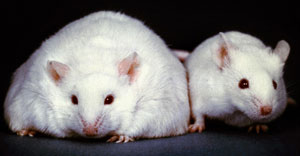
AS THE world’s fatties clock up the kilos, their excuses for being that way have piled up, too. Big bones, junk foods, genes or poor parenting—there are plenty of directions in which to point a chubby finger. In the past few years, a new potential culprit has emerged: gut bacteria. Human guts are full of bugs that help digestion and also stop their disease-causing counterparts from invading. In this age-old symbiosis, some bacteria are better than others at providing food to their human hosts—and also seem, by mechanisms yet unknown, to encourage those hosts’ bodies to store that energy as fat and to keep the fat on.

现今肥胖人群日益扩大,可能的原因也千奇百怪,堆积如山。比如,营养过剩,垃圾食品,(肥胖)基因,不当的(父母)养育方式,这些都被指作是导致肥胖的因素。在过去的几年里,一个新的潜在的主要的祸因逐渐浮现:肠道微生物。人类肠道内有大量的共栖细菌,它们帮助消化并且阻止病菌对寄主的侵害。在这些古老的共生菌中,部分细菌提供给它们的寄主的营养比其它细菌要多的多。当然,藏在其中的,比如细菌是如何激励它们的寄主的身体把脂肪当作能量储备的机理似乎现在还是个谜。

In the past, when food was in limited supply, these bacteria would have been valuable allies. In an era of plenty, though, they are problematic. In particular, work on mice suggests obesity is associated with having a high proportion of bacteria called Firmicutes, whereas the lean favour another group, the Bacteroidetes. Such work has also raised the suggestion that transplanting “lean mouse” microbes to fat mice can make them thinner—for a while.

在食物匮乏的时代,这些细菌是很有价值的盟友。然而在物质丰富的当下,它们就成了祸因。尤其是,用老鼠做的实验表明,肥胖和一种叫硬壁菌门的细菌的高比例存在有关。反之,那些窈窕的老鼠肠道内拟杆菌的比例更高。这使得移植窈窕老鼠肠道内的细菌到那些肥胖的老鼠体内从而使它们减肥的提法-哪怕只是一会儿-逐渐浮现出来。

What is true in the mouse, though, might not be true in the man, so more research is clearly needed. But finding volunteers willing to have someone else’s bacteria transplanted into their own intestines is tricky. So, in a paper in this week’s Science Translational Medicine, Peter Turnbaugh of the Washington University School of Medicine, in St Louis, and his colleagues, describe a halfway house. They have created a mouse with a humanised gut flora.

虽然这个建议对老鼠有效,但是未必对人类也有效。因此,更多的研究显然是必须的。然而寻找到愿意移植他人的肠道细菌到自己体内的志愿者的工作却艰难的多。所以,在本周的转化医学科学周报上发表的报告里,圣路易斯的华盛顿大学医学院的Peter Turnbaugh和他的同事提出了一个中转计划。他们利用老鼠建立了人类肠道寄主模型。

They did it by taking ten-week-old mice that had been bred to be free of germs and colonising their guts by feeding them with human faeces. (Note to the squeamish: the article adds that mice are coprophagic.) After this, the mice could be tested on various kinds of diets to see how the bacteria responded. These studies show similar sorts of outcomes to those previously seen with native mouse bacteria, including the increased obesity associated with Firmicutes.

他们培养了年龄为十周的肠道内无菌的实验老鼠,之后在它们的肠道内移植了人类排泄物(备注,虽然这句看起来有些恶心,但是,文章指出,老鼠和苍蝇一样有着Coprophagia-食粪性)。然后,这些老鼠被各种饮食测试,以观察肠道内细菌的反应。研究表明,移植后的老鼠和体内自有菌群的老鼠有着类似的结果,包括使肥胖症状增长有关的硬壁菌。

The point of it all is to allow more precise investigation of how human gut bacteria work. Such studies will also, no doubt, give rise to an industry testing new classes of “probiotics” that can be added to food in order to ameliorate its obesity-inducing effects. In other words, to sell special drinks that may make fat people less likely to pile on the pounds after eating a hamburger and fries.

这项研究的意义在于,促使人们对人类肠道菌群做更精确的研究。这样的研究无疑将促使相关产业开发和测试新的可以添加到食物中的益生菌以改善食物的肥胖副效应。换句话说,就是出售特殊的饮品给那些易于肥胖的人群,使得他们在食用汉堡包以及炸薯条后能减少增加赘肉的可能性。

http://www.economist.com/sciencetechnology/displayStory.cfm?story_id=14843803&source=hptextfeature

如果这个实验结果很快商业化,那么担心长胖的人们就可以在服用某些有益菌种后,放开肚皮,大吃特吃了。哈哈。
您需要登录后才可以回帖 登录 | 加入百蹊

本版积分规则

小黑屋|手机版|百蹊助学网 ( 粤ICP备14008989号 )

GMT+8, 2025-12-3 00:49 , Processed in 0.046118 second(s), 15 queries .

Powered by Discuz! X3.4

© 2001-2023 Discuz! Team.

快速回复 返回顶部 返回列表